Monday, July 30, 2018

Prelims answers

ANSWER SCHEME


Section A


Answer either Question 1 or Question 2 from this section.


1
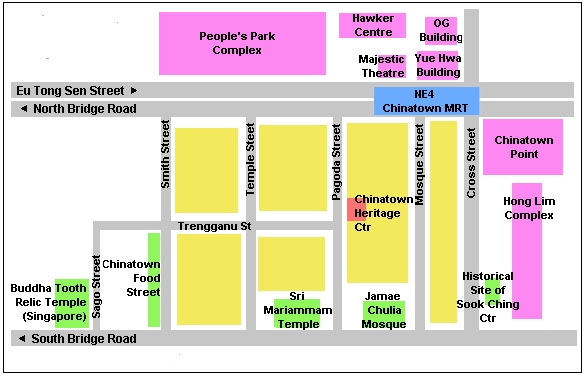
A group of students were investigating tourists’ impression of Singapore’s Chinatown.  Fig. 1 is a map of Chinatown.


Map of Chinatown
Fig. 1

(a)
The students devised a bipolar survey and asked 20 tourists to complete it.

Using Fig. 1, suggest and justify a possible site in Chinatown where the students could conduct the survey. [2]

  • Exit/ entrance/ near Chinatown MRT station : High traffic of visitors
  • Near Chinatown Food Street and Buddha Tooth Relic Temple: Tourist attraction site will have a lot of tourists

Location – 1 mark
Reason – 1 mark


(b)
Describe a sampling technique for conducting the bipolar survey and explain how this is administered. [3]

  • System sampling method
  • Decide on a regular interval e.g. 5th person.
  • Approach the 5th tourist who passes you.

Note : Cannot use subgroups or random sampling method as the traffic flow is high. Therefore most logical method is by sampling


(c)
Study Fig. 2 which shows the results of tourists’ impression of Chinatown.

Bipolar survey on tourists’ impression
Negative aspects
-2
-1
0
1
2
Positive aspects
Dirty
0
0
3
16
1
Clean
Quiet
0
1
14
4
1
Lively
Untidy
0
2
8
7
3
Well-maintained
Poor accessibility
0
0
4
14
2
Accessible
Boring
1
2
8
7
2
Interesting

Fig. 2

Complete the bipolar graph using data from Fig. 2.   The first two environmental factors have been drawn for you as an example. [3]


(d)
Does the data from Fig. 2 and bipolar graph support the hypothesis ‘Tourists have a positive impression on Singapore’s Chinatown’?  Give reasons for your answer. [4]

  • Yes
  • According to bipolar graph, the positive aspects for all environmental factors outweigh the negative aspects.
  • Furthermore, highest positive results came from cleanliness and accessibility which obtained 18
  • There are only 3 aspects which gathered negative results, with only a total of 6 negative responses.
  • The factor on liveliness of the area is also an anomaly with 14 respondents giving neutral responses.

1st point + Any 3 other points.  Accept any plausible data as answer

Note: Well answer by Armin!

(f)
Provide one suggestion to improve the reliability of the investigation. [1]

  • Increase the number of tourists surveyed
  • Students should go to different locations in Chinatown instead of one
  • Students should go on weekday and weekends
  • Students should go at different times of the day

Note: Many students do not understand 'reliability'. it means how to make the data collected to be more accurate.


[Total: 13 marks]


2
Some students in Sydney, Australia were investigating local weather conditions.  Fig. 3 is a map of an area in Sydney showing the possible sites to collect weather data and the results of their weather measurements are shown in Fig. 4.

Possible sites of collecting weather data
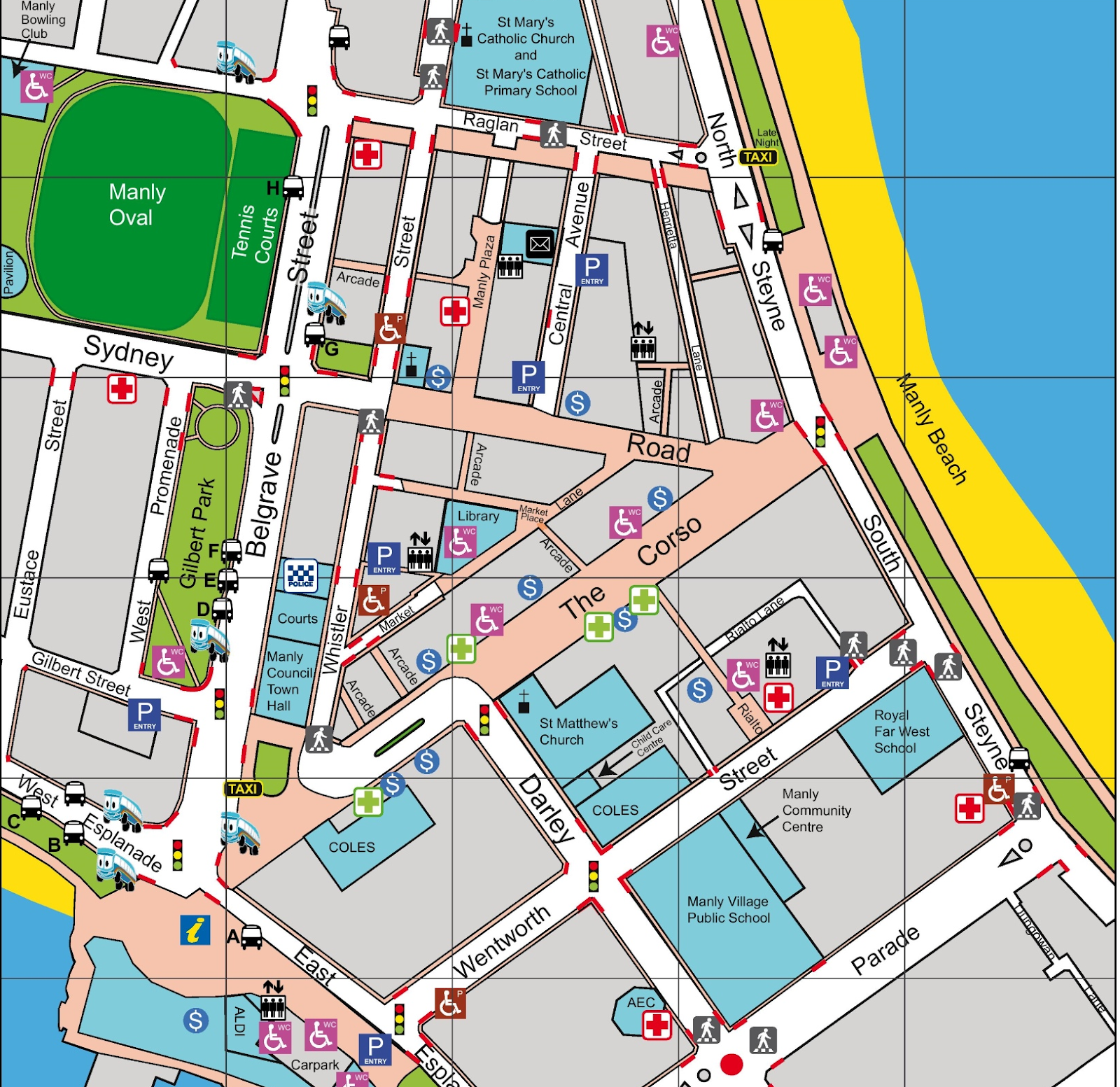
Fig. 3


Results of weather data collected
Day
Mean temp (oC)
Average pecipitation (mm)
Average wind speed (km/h)
Average humidity (%)
1
17
5
15
57
2
16
7
25
63
3
16
0
13
63
4
18
0
11
72
5
16
6
13
81

Fig. 4

(a)
Which site, A, B or C, is the most suitable to collect weather data.  Justify your answer. [2]

  • A [1] : Away from buildings/ obstructions [1]


(b)
The students decided to use a sling psychrometer to collect data on humidity.  Describe the procedures they would take to obtain accurate readings of the wet-bulb temperature. [3]

  • Dip the wick of the wet bulb thermometer in water.
  • Swing the sling psychrometer at a steady and comfortable pace.
  • After 1 minute, stop swinging.  Read and record the temperature on the wet bulb thermometer.
  • Repeat this procedure once more such that the same temperature is recorded to ensure accuracy.
Note: Its WICK! not WIG!


(c)
Complete the bar and line graph using data from Fig. 4.  Data for Day 1 and 5 have been plotted for you as an example.

Temperature and precipitation of an area in Sydney, Australia
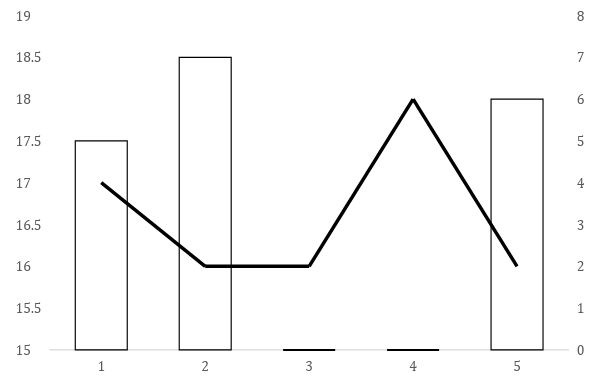


[3]


(d)
Using evidence from Fig. 4, state if the guiding question ‘Does wind speed affect humidity? Is answered.  Give reasons for your answer. [4]

  • Wind speed does not affect humidity.
  • While there were instances where increase in wind speed seems to affect humidity positively, for example, Day 1 and 2 where wind speed increased by 10km/h, humidity also increased from 57% to 63%.
  • However, when wind speed decreased from Day 2 to Day 3, humidity stayed constant.

Accept other data as answers.


(e)
Provide one suggestion to improve the reliability of the investigation. [1]

  • Collect data at more intervals throughout the day for a longer period of time


[Total: 13 marks]


Section B


Answer Question 3 from this section.


3
Study Fig. 5, a map which shows a town in Norway.

Town map of Geiranger, Norway
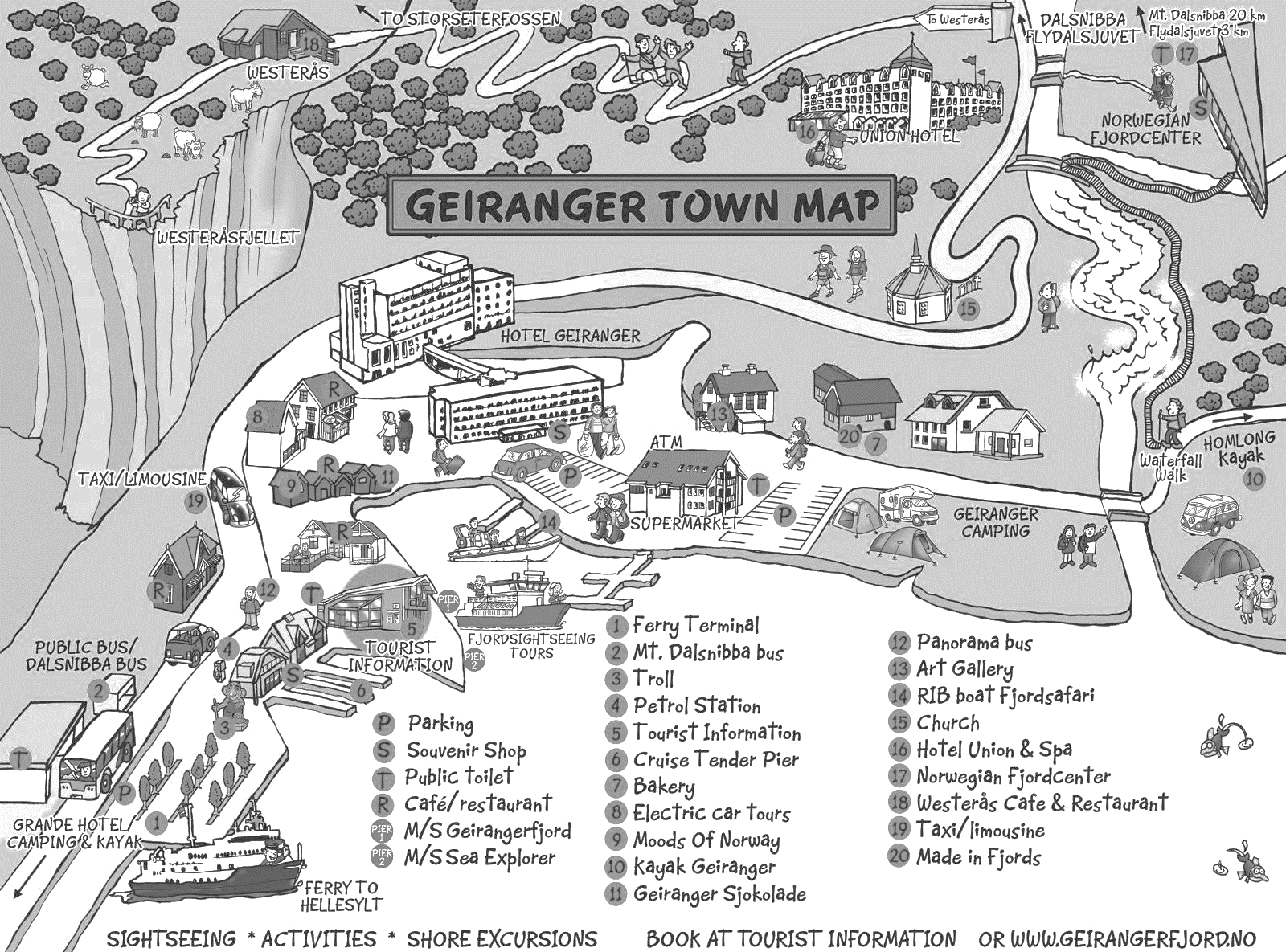
Image result for tourist map

Fig. 5

(a)
Using evidences from Fig. 5, describe what might attract tourists to the area. [3]

  • Availability of 2 hotels: Hotel Geiranger and Hotel Union
  • It can be accessed by ferry at Ferry Terminal, vehicles by roads
  • Different kinds of activities are available like camping at Geiranger Camping site, spa at Union Hotel, go on a Fjordsight seeing tour, kayaking at Kayak Geiranger, cruise on M/S Sea Explorer, etc
  • Food options include bakery, café and restaurants
  • Attractions like waterfall walk, mount Dalsnibba is nearby, etc

Accept any plausible answer.  
There must be at least 1 specific example in answer to obtain full marks. Must also mention three categories of attractions eg recreational, infrastructure, accommodatino etc.


(b)
Study Fig. 6, which shows the number of China’s tourist arrivals and the country’s growth rate.

Number of inbound tourist arrivals and country’s growth rate in China

Fig. 6

Using Fig. 6, describe the relationship between the number of China’s inbound tourist arrivals and its growth rate from 2011 and 2016. [3]

  • The relationship is generally positive.
  • When the number of inbound tourist arrivals generally increased by 2,576,500 people between 2011 and 2016, the growth rate also increased by 3.64%.
  • However, between 2015 and 2016, when the number of inbound tourist arrivals increased by 4,179,200 people, the growth rate decreased 0.6%.
  • 2011 to 2013 -slight decrease

Note : Must provide DATA


(c)
‘Global economic recession is a main cause of fluctuations in the tourism industry.’

How far do you agree with this statement?

Give examples to support your answer.

Candidates may consider the following causes of fluctuations in tourism:

Global Economic Recession
  • Global recession affects many countries around the world.
  • Many people will experience a loss of income or jobs.
  • This decline in income causes people to cut back on spending.  This leads to a decline in demand for goods and services.
  • Therefore, people are less likely to travel overseas during a recession.
  • Example: Global Financial Crisis in 2008.

Disasters
  • Disasters cause great damage to properties, lead to injuries or cause great loss of life.
  • They discourage tourists from visiting the destination.
  • They pose greater risks to the safety of tourists and may disrupt essential tourist infrastructure.
  • Example: Tohoku Earthquake in 2011

Political situations
  • Political conflicts pose dangers to tourists.
  • They disrupt services and cause damage to infrastructure.
  • Government authorities may also issue travel advisories that discourage citizens from travelling to a particular region or country.
  • Example: Governments from most countries banned their citizens from travelling to Libya for most of 2011/ Arab Spring uprising hit Egypt in 2011.

Diseases
  • Outbreak of diseases can cause a huge drop in tourist arrivals.
  • Tourists do not want to risk getting infected with a contagious disease.
  • Government agencies may also advise travelers to avoid areas with disease outbreaks.
  • Example: SARS in 2003/ Mexico’s H1N1 influenza outbreak in 2007

Candidates at each level will show the following characteristics:

Level 1 (0 - 2 marks)
At this level answers will be generalized or with minimal support if any stand were given at all.
Reasoning rather weak and expression may be unclear.
A basic answer that has little development.

Award L1/1 for answer limited to simple listing of one or two cause.
Award L1/2 for answer with description of one or two cause.

Level 2 (3 - 4 marks)
Disagreement and agreement will be supported by appropriate detail.
Or, both agreement and disagreement are considered, but support is patchy so that the answer is not full.  
Good reasoning and logic in parts of the answer with good expression in places.

Award L2/3 for answer with balanced evaluation of two causes or one cause with example.
Award L2/4 for answer with balanced evaluation of two causes with at least ONE example given.

Level 3 (5 - 6 marks)
At this level answers will be supported by sound knowledge.
Both agreement and disagreement are considered and well supported.  
Reasoning is clear and logical with good expression of language.

Award L3/5 for answer with balanced evaluation of two causes with examples.
Award L3/6 for answer meeting requirements for L3/5 and a good conclusion.              


Section C


Answer either Question 4 or Question 5 from this section.


4
(a)
Study Fig. 7, a diagram of convection current currents driving the movement of plates.

On the diagram locate, using the appropriate letter, the following:

  • Convergent plate boundary (A)
  • Divergent plate boundary (B)
  • Oceanic crust (C)
  • Mantle (D)

An example, oceanic ridge (E), has been completed for you.

Convection current


Fig. 7
[4]


(b)
Explain how convection current causes the formation of arc of islands. [4]

  • Mantle is heated by core and rises up and will spread under the crust, cool down and sinks.
  • The sinking of the magma will pull the crust along and plates will converge.
  • The denser plate will subduct beneath the less dense plate and cause the mantle material above it to melt forming magma.
  • The magma rises through the crust and forms volcanoes.  Eventually, an arc of islands is formed.

Good answer : Tasmin


(c)
Study Fig. 8, which shows an area in in southern Taiwan which was damaged by an earthquake.

Damaged caused by earthquake in southern Taiwan
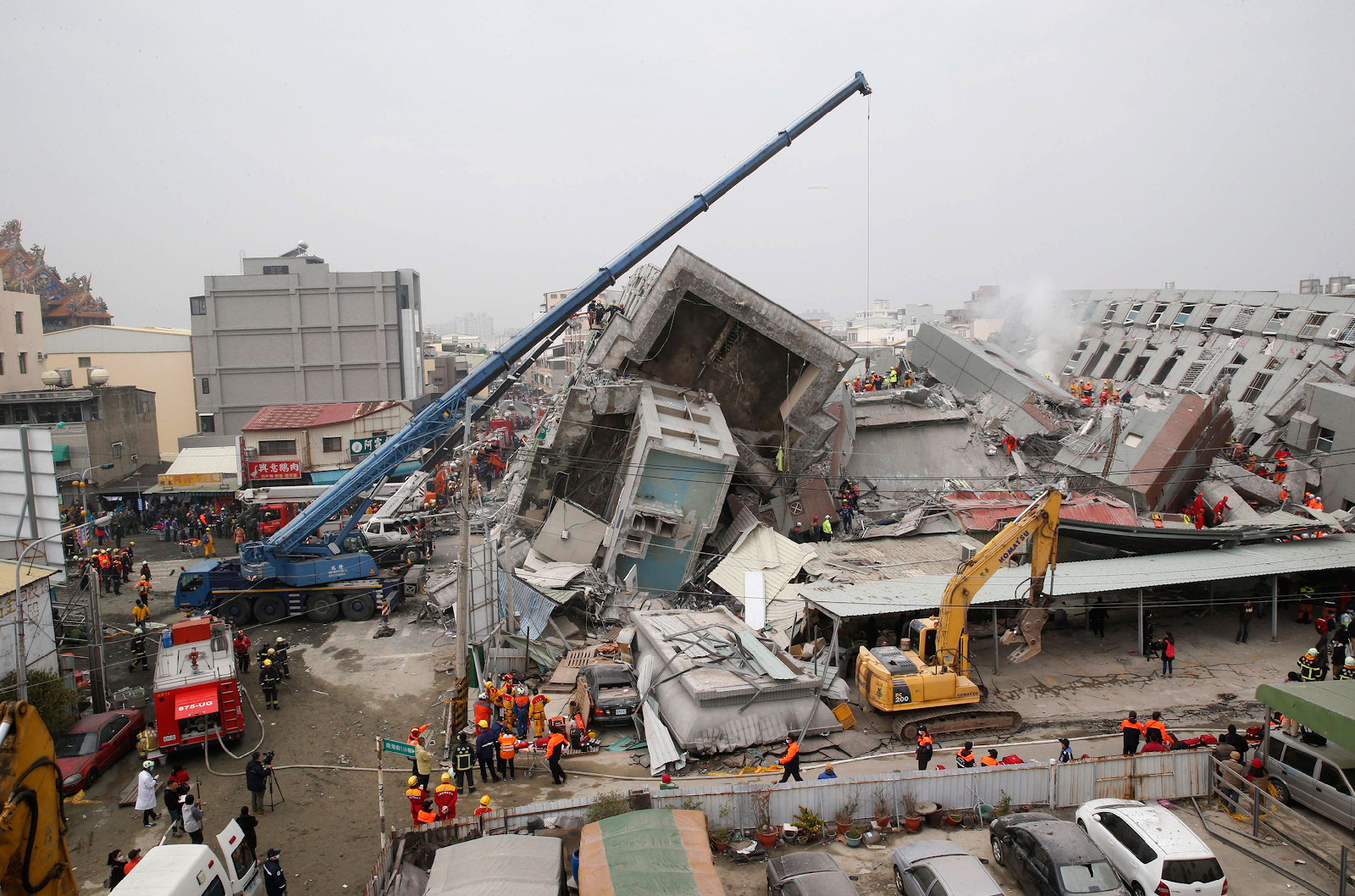
Fig. 8

With the help of Fig. 8, describe the risks experienced by the people living in earthquake zones. [3]

  • Services such as supply of electricity, gas and water can be disrupted as vibrations can snap pipes and break cables / Communication services may be affected as transmission lines are damaged / Exposed cables may start fires
  • Earthquakes can cause widespread destruction to many homes and buildings.
  • Earthquakes may cause cracks to form on roads and disrupt transportation.
  • There may be injuries and / or loss of lives due to collapsed buildings.
  • The shaking of the ground can weaken the slopes of hills and mountains and may result in landslides.

Any 3 of above / Accept other plausible answer


(d)
Explain how latitude affects temperature. [4]

  • The sun’s rays strike various parts of the world at different angles and cause different temperatures at different latitudes.
  • The solar angle is high at the area between Tropics of Cancer and the equator.
  • This causes the sun’s rays to be more concentrated on the area.
  • Temperatures are thus higher at lower latitudes.
OR
  • The sun’s rays strike various parts of the world at different angles and cause different temperatures at different latitudes.
  • The solar angle is low at the area between Tropics of Cancer and the North Pole.
  • This causes the sun’s rays to be spread out over a larger area.
  • Temperatures are thus lower at lower latitudes.


(e)
Using an annotated diagram, describe how the presence of cloud cover causes a cooler day temperature. [4]


1 m


(f)
‘Climate change only impacts the environment.’

How far do you agree with this statement?

Provide examples to support your answer.

Good answers : Phoebe, Shuwen!

Candidates may consider the following impacts of climate change:

Environment Impacts
  • Higher temperatures may melt glaciers and ice caps.
  • This rises the sea level.
  • Example: Higher sea level has been recorded since late 1800s.
  • Higher temperatures may also warm the waters and aquatic life may not survive the higher temperatures.
  • Climate change may result in more frequent extreme weather events that will cause damage to flora and fauna’s habitats.
  • Higher temperatures allow mosquitoes to breed further north.
  • Example: polar bears are facing extinction/ people living near coastlines and low-lying are threatened by rising sea levels / Mauritius and Maldives are at risk of submerging due to rising sea waters

Social Impacts
  • Due to higher sea levels, people living near coastal areas have to move.
  • Example: Two thirds of world’s largest cities located in coastal areas are at risk.
  • Climate change may result in more frequent extreme weather events that will cause people to suffer physically.
  • Example: Europe experienced a heatwave in 2003 and killed more than 70,000 people.
  • Higher temperatures allow mosquitoes to breed in more places and for a longer time.
  • Example: Nepal and Bhutan have reported dengue fever for the first time in 2004.

Economic Impacts
  • Due to higher sea levels, people living near coastal areas have to move.
  • Government will need to spend money on building flood prevention infrastructure and/ or relocating its citizens to higher areas.
  • Climate change may result in more frequent extreme weather events that will cause people to suffer physically.  This will result in higher medical bills.
  • Example: Europe experienced a heatwave in 2003 and people suffered from heat exhaustion and related illnesses.
  • Higher temperatures allow mosquitoes to breed in more places and for a longer time.  This results in higher medical bills.
  • Example: Nepal and Bhutan have reported dengue fever for the first time in 2004 and money have to be spent on treatments.
  • Farmers in regions where the growing season is lengthened will enjoy higher income as more types of crops can be grown.  However, yields of certain crops will reduce as well.
  • Example: Production of fruit, soya beans and potatoes is projected to increase in Canada.

Candidates at each level will show the following characteristics:

Level 1 (0 - 2 marks)
At this level answers will be generalized or with minimal support if any stand were given at all.
Reasoning rather weak and expression may be unclear.
A basic answer that has little development.

Award L1/1 for answer limited to simple listing of one or two impact.
Award L1/2 for answer with description of one or two impact.

Level 2 (3 - 4 marks)
Disagreement and agreement will be supported by appropriate detail.
Or, both agreement and disagreement are considered, but support is patchy so that the answer is not full.  
Good reasoning and logic in parts of the answer with good expression in places.

Award L2/3 for answer with balanced evaluation of two impacts or one impact with example.
Award L2/4 for answer with balanced evaluation of two impacts with at least ONE example given.

Level 3 (5 - 6 marks)
At this level answers will be supported by sound knowledge.
Both agreement and disagreement are considered and well supported.  
Reasoning is clear and logical with good expression of language.

Award L3/5 for answer with balanced evaluation of two impacts with examples.
Award L3/6 for answer meeting requirements for L3/5 and a good conclusion.           


[Total: 25 marks]


5
(a)
Study Fig. 9, which shows the relationship between air temperature and relative humidity.

Relationship between air temperature and relative humidity
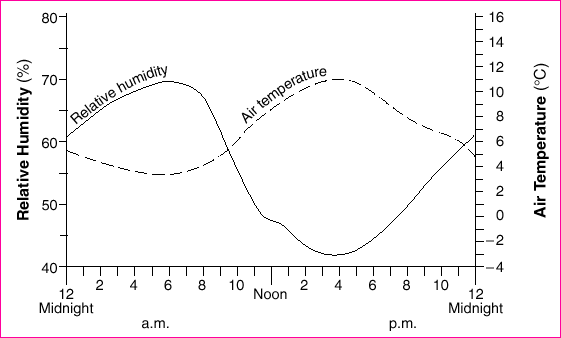
Image result for relationship between relief and temperature

Fig. 9

Using Fig. 9, describe the relationship between air temperature and relative humidity. [4]

  • They have an inverse relationship.
  • When the air temperature increased by 20C from 12 midnight to 6 am, the relative humidity decreased by 10%.
  • The air temperature decreased by 140C after 6 am to around 4 pm while relative humidity increased by 35%
  • As the air temperature increased by 90C from 4 pm to around 11 pm, the relative humidity decreased by around 25%.


(b)
Explain how a large water body is able to influence the seasonal temperature of an area. [3]

  • The large water body heats up and cools down more slowly than the land.
  • During summer, the air over the water body is cooler than the air over the land.
  • The cooler air over the sea helps lower the temperature of coastal areas.


(c)
Study Fig. 10, which shows a synoptic chart of Australia during July.

Synoptic chart of Australia in July

Fig. 10

State the monsoon wind experienced and explain why most of the southern part of Australia experienced rainfall.

  • Southeast monsoon
  • South of Australia is experiencing higher air pressure northern part is experiencing lower air pressure.
  • Air moves from higher pressure to lower pressure.
  • When winds blow across the ocean, it picks up some moisture and rains only at the southern part of the country and the rest of the country remains dry..


(d)
Fig. 11 shows the greenhouse effect.

Add annotations to Fig. 11 to explain how greenhouse effect keeps the earth warm. [4]


Greenhouse effect
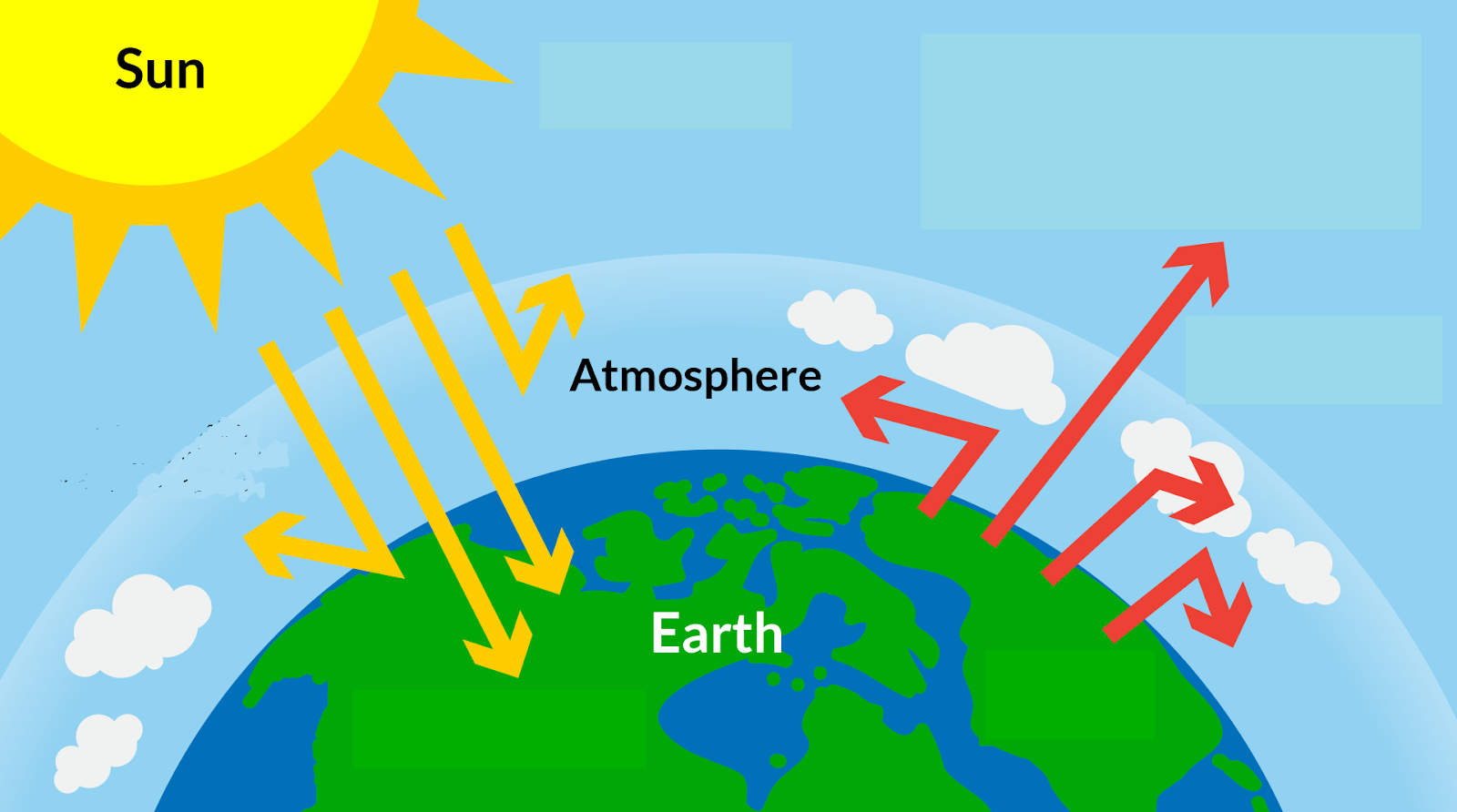
Fig. 11


(e)
Explain how deforestation contributes to increased concentrations of greenhouse gases. [4]

  • Forests absorbs billions of tonnes of carbon dioxide every year via photosynthesis.
  • With deforestation, there are fewer trees and other plants absorbing carbon dioxide leading to an increase of the gas.
  • Carbon dioxide is also emitted during the process of deforestation and land clearance.
  • More carbon dioxide means more heat is absorbed causing higher global temperatures.
OR
  • Carbon in the soil is accumulated through decay of organic matter.
  • Deforestation exposes soil to sunlight and increase the rate of carbon oxidation in the soil.
  • This reacts with oxygen to produce carbon dioxide.
  • More carbon dioxide means more heat is absorbed causing higher global temperatures.


Good answer : Xuan Chan


(f)
‘Climate change only impacts people.’

How far do you agree with this statement?

Provide examples to support your answer.

Candidates may consider the following impacts of climate change:

Social Impacts
  • Due to higher sea levels, people living near coastal areas have to move.
  • Example: Two thirds of world’s largest cities located in coastal areas are at risk.
  • Climate change may result in more frequent extreme weather events that will cause people to suffer physically.
  • Example: Europe experienced a heatwave in 2003 and killed more than 70,000 people.
  • Higher temperatures allow mosquitoes to breed in more places and for a longer time.
  • Example: Nepal and Bhutan have reported dengue fever for the first time in 2004.

Environmental Impacts
  • Higher temperatures may melt glaciers and ice caps.
  • This rises the sea level.
  • Example: Higher sea level has been recorded since late 1800s.
  • Higher temperatures may also warm the waters and aquatic life may not survive the higher temperatures.
  • Climate change may result in more frequent extreme weather events that will cause damage to flora and fauna’s habitats.
  • Higher temperatures allow mosquitoes to breed further north.
  • Example: polar bears are facing extinction/ people living near coastlines and low-lying are threatened by rising sea levels / Mauritius and Maldives are at risk of submerging due to rising sea waters


Economic Impacts
  • Due to higher sea levels, people living near coastal areas have to move.
  • Government will need to spend money on building flood prevention infrastructure and/ or relocating its citizens to higher areas.
  • Climate change may result in more frequent extreme weather events that will cause people to suffer physically.  This will result in higher medical bills.
  • Example: Europe experienced a heatwave in 2003 and people suffered from heat exhaustion and related illnesses.
  • Higher temperatures allow mosquitoes to breed in more places and for a longer time.  This results in higher medical bills.
  • Example: Nepal and Bhutan have reported dengue fever for the first time in 2004 and money have to be spent on treatments.
  • Farmers in regions where the growing season is lengthened will enjoy higher income as more types of crops can be grown.  However, yields of certain crops will reduce as well.
  • Example: Production of fruit, soya beans and potatoes is projected to increase in Canada.


Candidates at each level will show the following characteristics:

Level 1 (0 - 2 marks)
At this level answers will be generalized or with minimal support if any stand were given at all.
Reasoning rather weak and expression may be unclear.
A basic answer that has little development.

Award L1/1 for answer limited to simple listing of one or two impact.
Award L1/2 for answer with description of one or two impact.

Level 2 (3 - 4 marks)
Disagreement and agreement will be supported by appropriate detail.
Or, both agreement and disagreement are considered, but support is patchy so that the answer is not full.  
Good reasoning and logic in parts of the answer with good expression in places.

Award L2/3 for answer with balanced evaluation of two impacts or one impact with example.
Award L2/4 for answer with balanced evaluation of two impacts with at least ONE example given.

Level 3 (5 - 6 marks)
At this level answers will be supported by sound knowledge.
Both agreement and disagreement are considered and well supported.  
Reasoning is clear and logical with good expression of language.

Award L3/5 for answer with balanced evaluation of two impacts with examples.
Award L3/6 for answer meeting requirements for L3/5 and a good conclusion.   


[Total: 25 marks]


END OF ANSWER SCHEME

Thursday, July 19, 2018

Transform plates by Xuan Chan

  • Transform plates: how it happens

  • Two continental plates slide past each other.
  • As they do so, they cause tremendous stress to build up.
  • The build up stress is then released, which often causes a violent earthquake.

  • Occurred in 1906, in san francisco.
  • Between the pacific plate and north american plate.
  • The movement of plates moved 7m over a period of 1 minute.

  • Earthquakes
  • Vibration in the earth’s crust
  • Sudden release of stored energy in the rocks near the fault lines.

  • tsunami
  • Large sea waves
  • Caused by:
  • Movement of sea floor
  • Underwater eruption
  • Landslides on land & sea


  • Volcanoes
  • A landform
  • Formed by the eruption magma from the mantle onto the earth’s surface


  • Active
  • Currently erupting
  • expect to erupt
  • Dormant
  • Currently inactive
  • May erupt in the future
  • Extinct
  • No current seismic activity

Tuesday, July 10, 2018

Revision - Responses to climate change by Wai Teng


Kyoto Protocol:
      - To reduce greenhouse gases from being released into the atmosphere.
      - It started on 11 December 1997, however it started on 16 February 2005.

The main key points that you will need to take notes are:
-Reduce                        - met or exceeded
-Release                        - sustainable development (CDM)
-11 December 1997       - Not all (E.g Denmark, Sweden and the UK)
-16 February 2005         - Many did not sign (E.g China, India and USA)


1.Singapore Green Plan 2012 (Reduce consumption and emission of green house gases from fossil fuels)
2.Green Mark Scheme (Construct green buildings)
3.Plant – A – Tree Campaign (Planting more trees)


GREEN MARK SCHEME

POINT 2
Launched in 2005. Success: the National Library building and many more, have saved 15% to 35% compared to conventional buildings.

ELABORATE 2
To make buildings energy efficient and environmentally friendly

EG 2 E.g Buildings that can run on solar power such as the National Library building  / Plaza by the Park etc
Limitation 2: ‘green’ materials are expensive and the construction company and the developers are very conservative on bringing in new ideas.


GREEN PLAN

POINT 3
Launched by the ministry of environment in 2002

ELABORATE 3
To generate 60% of Singapore’s energy needs with natural gas by 2012
Success: In 2010, the plan had already exceeded their target, 79% was conserved

EXAMPLE : ?

LIMITATION 3:
Limitations: Natural gases require complex treatment plants to process and pipelines transport. However, pipelines are very expensive and they have to be checked regularly for any leakage.


Launched in 1971
To maintain Singapore’s status as a Garden City by planting trees
Residents are encouraged to donate money to buy a tree or take part in these events that happens monthly
Success: Contributed to 60000 trees planted yearly, the trees help to remove carbon dioxide from the air around us
Limitation: Tree takes many years to grow, even trees that grows the fastest takes about 25 years to reach their full height


LDQ

I agree with this statement to a large extent that international responses to climate change are limited in their effectiveness. 

POINT 1

The Kyoto Protocol is implemented to reduce greenhouse gases emission into the atmosphere, this protocol is drawn up on 11/12/1997, but was officially implemented on 16/02/2005. This protocol sets goals for different countries to achieve its goal. 

ELABORATE 1

The Kyoto Protocol may have many countries meeting or exceeding their targets or even developed countries helping developing countries to reduce carbon-based projects such as CDM (Clean Development Mechanism). 

EG1 

However, there are also some countries that did not meet their goals, such as Denmark, Sweden and United Kingdom and there are also countries that did not signed the Kyoto Protocol and continued to release carbon emission into the atmosphere. 

LIMITATION 1

For example; China, India and the United States Of America did not sign the protocol but they released large portion of global emissions into the atmosphere.


In conclusion, I agree that the international responses are limited to its effectiveness as there are countries that does not understand why the world had become polluted with polluted atmosphere and how dangerous it is to the human lives. I suggest that all the countries should come together and create a special campaign to dedicate to reducing the amount of emissions by giving talks and maybe advertisements on how dangerous these problems may cause and how we can help to prevent it. Therefore, I agree that the international responses are limited to its effectiveness.

Monday, July 2, 2018

Geog remedial

Reg No Student Name
2 CHERMAINE TOH
4 JOCELYN QUEK
5 KOH YING XUAN
7 LIEW YA HAN, PHOEBE
14 ARMIN ZIQRY B ZULKEFLE
15 DARREN TOH WEI BIN
16 ENZO LAU ZHEN YU
19 LOUIS VOON CHI KIN
20 TAY KAI WEN

The following students have failed their Geog MYE and will need to attend Geog remedial for structured intervention.  It will be on 19th July Thursday after school at 2.30pm. Please bring your MYE paper so that we can go through your mistakes. Prepare questions that you have. If anyone else is keen, please let me know if you want to attend.

Thursday, June 28, 2018

Revision on Sea and LAnd breeze - By Jocelyn


Describe land breeze.


At night, the land cools faster than the sea.
Air above the sea over the water is warmer, less dense and begins to rise.
 Low pressure is created over the water.
Cold and dense air over the land begins to move towards the sea to replace the warmer rising air.
The cool breeze from the land is called a land breeze.

Revision on Relief and Convectional Rain - By Tasmin Foo


TOPIC : RELIEF AND CONVECTIONAL RAINFALL
 

·      TEN YEAR SERIES 2014 PG15

·      Q5(A)

 
1.   The sun's energy reaches the earth. 

2.   The earth's surface is heated by the sun's energy. This in turn heats up the surrounding air.

3.   Air expands and rises.

4.   As the air rises, it cools. Air reaches dew point temperature and condensation occurs.

5.   Cumulonimbus clouds are often formed.

6.   When water droplets become large and heavy enough, they fall to the ground as rain.

Tuesday, June 26, 2018

Revision on Temperature - By Anna Wong


LESSON PLAN:
Revision plan (7 minutes):
·       Playing kahoot for max 5 minutes


Questions from the tys (6 minutes to try):
·       TYS 2016 page 13 question 4b (don’t have to draw anything)

Go through question (7 minutes):
Check TYS answers first then show my answer.

MY answer:
·       Temperatures are generally lower at higher latitudes, due to the distance the sun rays have to travel. The sun rays are shorter when a country is located closer to the equator, thus causing that country to experience higher temperatures.

·       For Singapore, we are located near the equator meaning we have a low latitude, and thus the sun rays take a shorter time to travel to Singapore and therefore we experience warm temperatures all year round. This kind of climate is called the equatorial climate.

·       For Beijing, they are located far from the equator and very near to the poles, allowing it to have a high latitude, hence the sun’s rays strikes the earth’s surface at a lower angle and take a longer time to reach Beijing, therefore, Beijing experiences cooler temperatures. This kind of climate is known as the cool temperate climate.

·       Therefore, we can say that due to the difference in latitudes of both countries, both countries experience different climates and are affected differently.


About Me

Travel. Sports. Nature. Colours. Animals.